Bike listed at 48 pounds? What it actually weighs with battery, rack and lock
Published e-bike weights routinely leave out the battery, rack, fenders and lock, and the gap between a 48-pound listing and a 62-pound bike is felt at every doorway and curb.
Choosing an electric bicycle around rider fit, frame shape, weight and battery size rather than around marketing categories
The Mixte Bar
Battery weight range
A removable e-bike battery typically adds somewhere between five and eight pounds, and larger capacity packs add more. That mass is almost never included in a frame-only listing.
Two bikes sit next to each other in a shop, one listed at 48 pounds and one at 62, and the difference sounds like a number rather than a daily fact. It is a daily fact. The lighter bike goes over a curb with a hip and a forearm; the heavier one wants both hands, a planted foot and a moment of thought. Before any of that matters, though, there is a prior question worth settling, which is whether either listed figure describes the bike as it will leave the shop with you.
What the spec sheet is quietly leaving out
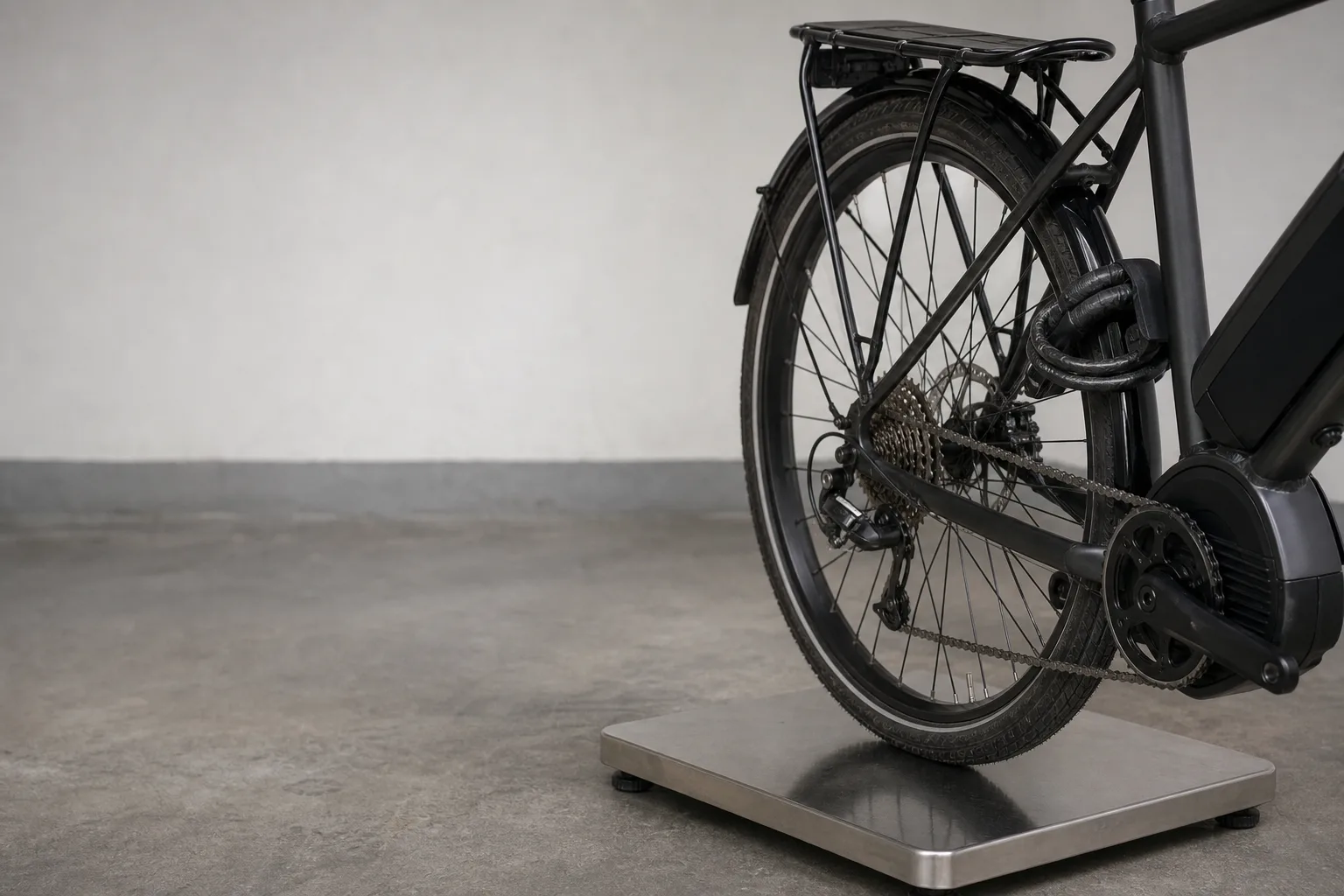
Manufacturers weigh what they choose to weigh, and the convention varies enough that two honest listings can be measured differently. A frame weight excludes the battery, which on a typical mid-size pack runs somewhere between five and eight pounds and on a large one meaningfully more. Some listings also omit the rear rack, the fenders, the kickstand and occasionally the pedals. Add a heavy chain lock in a frame bag and you can be twelve or fifteen pounds past the number that persuaded you, all of it added after the decision was made.
The careful check is simple and takes one question at the counter: is this weight with the battery in, and does it include the rack and fenders as fitted? A shop that knows its stock will answer without hedging, and the better ones will put the bike on a scale for you. Failing that, a bathroom scale at home works if you weigh yourself, then weigh yourself holding the bike, and accept the two or three pounds of error that method carries. That error is small compared with the omission you are hunting.
Where the extra pounds are actually sitting
Weight on an e-bike is not spread evenly, and knowing where it sits tells you more than the total does. The battery is the single largest addition, and whether it rides low in the downtube or high on a rear rack changes how the bike behaves when tipped, wheeled or lifted. The motor accounts for several pounds, more in a mid-drive than in most rear hubs. Then come the parts nobody lists: puncture-resistant tires with thick casings, a steel rack rated for a child seat, integrated lighting, and the beefier frame tubing that carries all of it.
A rack-mounted battery high and behind the seatpost makes a bike awkward long before it makes it heavy, because the mass swings when you lean the frame to get it through a gate. A downtube battery placed between the cranks keeps the bike feeling settled and, more usefully, keeps the weight near your hand when you grip the frame to lift. Two bikes with identical scale readings can be a full grade apart in how manageable they feel on a staircase, and the difference is placement rather than pounds.
The four moments that decide it
Test the bike against the specific things you will do, not against a general idea of heaviness. Lifting a front wheel over a curb is trivial at any weight. Lifting the whole bike over a threshold, up a stoop, or into a hallway is where 48 and 62 pounds separate, and a flight of steps taken twice a day settles the question permanently. Loading onto a hitch rack is the hardest of the four, because you are lifting to waist height and past your body, which is why many riders pull the battery first and put it in the trunk.
Doorways deserve their own trial. A bike with a rack, fenders and wide bars is bulky in a way the scale never records, and getting it past a coat hook and around a newel post is a matter of geometry as much as mass. If storage means a basement or a third-floor apartment, borrow the bike and carry it up before you buy. The Consumer Product Safety Commission oversees safety standards for e-bikes and their battery systems, and removable packs, which most riders end up carrying separately anyway, keep that lifting weight manageable.
Reading two bikes side by side
Once you have real numbers, compare them the same way each time: bike as ridden, with the battery in, the rack fitted and the lock aboard. A 62-pound cargo-capable machine with a low downtube battery may serve a rider with ground-floor storage better than a 48-pound bike with a rear pack serves a rider with fourteen steps. The weight only means something once you attach it to your own doorway, your own curb and your own car.
Ask for the scale reading before the sale, not after. It is the cheapest piece of information in the whole purchase, and it settles an argument you would otherwise have with yourself every morning.